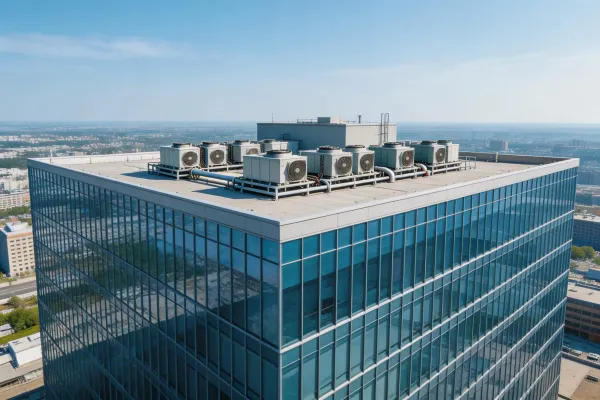
Commercial Buildings
ThermaVerde air-source and water-source heat pumps replace legacy gas boilers in office complexes, hotels, shopping centers, and university campuses. Our inverter-driven systems modulate heating output from 20% to 100% capacity, matching real-time building load profiles and eliminating cycling losses.
- Capacity range: 50 kW to 2 MW per unit
- Heating COP: 4.2-5.2 at A7/W35 rating conditions
- Sound pressure: below 52 dB(A) for urban rooftop placement
- BMS integration: BACnet IP and Modbus RTU
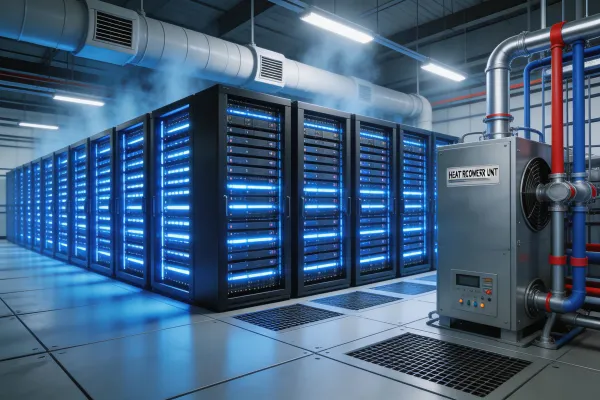
Data Centers
Data centers produce enormous quantities of low-grade waste heat at 30-45 degrees Celsius. ThermaVerde heat recovery heat pumps capture this thermal energy and upgrade it to 65-80 degrees Celsius for district heating feed-in, domestic hot water, or adjacent building heating. Simultaneous free cooling and heat recovery maximizes total system efficiency.
- Heat recovery capacity: 200 kW to 5 MW
- Output temperature: 65-80 degrees Celsius from 35 degrees Celsius source
- Redundancy: N+1 compressor configuration standard
- PUE impact: reduces effective PUE by 0.1-0.15
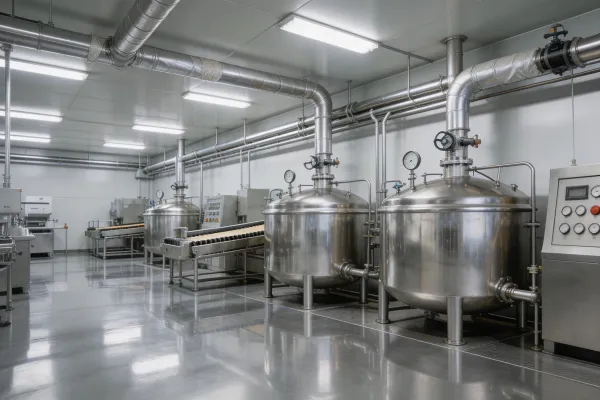
Food & Beverage Processing
HACCP-compatible heat pump systems for pasteurization, drying, cleaning-in-place (CIP) hot water generation, and process heating. R-744 transcritical units deliver hot water up to 90 degrees Celsius in a single stage, eliminating the need for supplementary gas boilers in many food processing applications.
- Hot water output: up to 90 degrees Celsius (R-744 transcritical)
- HACCP-compatible stainless steel construction
- Simultaneous heating and cooling capability
- Heat recovery from refrigeration waste heat
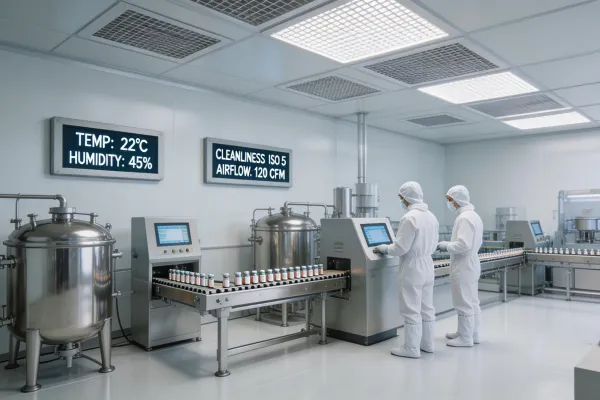
Pharmaceutical & Life Sciences
Precision temperature control is non-negotiable in pharmaceutical production. ThermaVerde heat pumps maintain +/-0.5 degrees Celsius setpoint accuracy across cleanrooms, storage areas, and process zones. Fully redundant N+1 compressor configurations maintain continuous operation during single-unit maintenance or failure events, with automatic failover in under 30 seconds.
- Temperature stability: +/-0.5 degrees Celsius
- GMP-compliant documentation and validation support
- Redundant N+1 compressor architecture
- Low-vibration design for sensitive laboratory environments
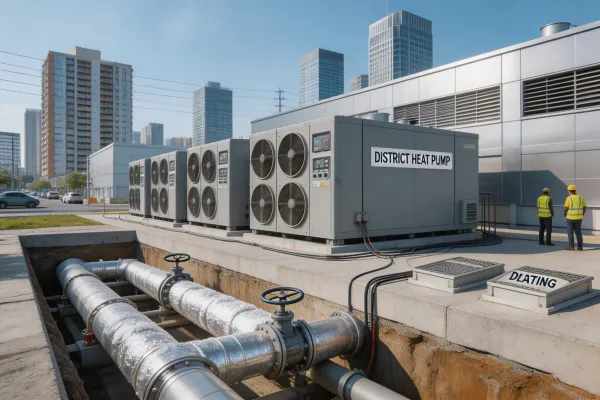
District Heating & Energy Networks
Large-scale water-source heat pumps extract thermal energy from rivers, wastewater treatment plants, geothermal wells, and industrial waste heat streams. ThermaVerde supplies modular heat pump units from 500 kW to 10 MW for integration into 4th-generation district heating networks operating at 55-70 degrees Celsius supply temperatures.
- Capacity per unit: 500 kW to 10 MW
- Supply temperature: 55-70 degrees Celsius
- Source flexibility: river water, sewage, geothermal, waste heat
- COP: 3.5-4.5 depending on source/sink differential
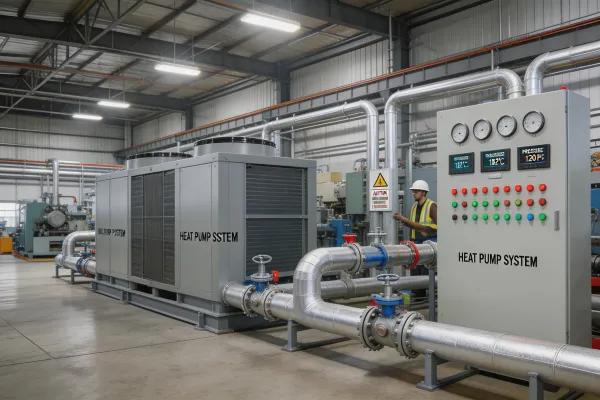
Industrial Process Heating
High-temperature industrial heat pumps deliver process heat at 80-120 degrees Celsius for drying, evaporation, distillation, and preheating applications. Using R-744 transcritical or R-1234ze cascade configurations, ThermaVerde systems achieve COP 3.0+ even at elevated output temperatures, replacing steam boilers in qualifying processes.
- Output temperature: 80-120 degrees Celsius
- COP: 3.0-4.0 at high-temperature lift
- Waste heat recovery integration
- Cascade and transcritical CO2 configurations